




BIOFUELS - BIODIESEL
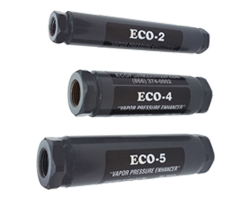
The ECO Fuel System is a proven beneficial solution to helping Biodiesel burn
more combustible and cleaner. The ECO Fuel System via Certified Testing
facilities show that all fossil fuels burn cleaner and more efficiently.
No Additives, No motor modifications.
Via Electrolysis and Electrostatic Energy it increases fuels Vapor Pressure.
more combustible Biodiesel Fuel can help not only increase efficiency but assist
in helping keep filters like DPF’s as well as injectors cleaner longer.
What are Biofuels?
Biofuels are crafted from natural matter which includes plant and animal waste.
Unlike fossil fuels, biofuels are taken into consideration as renewable because
their resources can be refilled. The main styles of biofuels are:-
Ethanol: An alcohol constructed from vegetation which includes corn and sugarcane, used commonly as a gasoline. –
Biodiesel: Made from recycled vegetable oils, animal fats, or fat, may be utilized in diesel engines.
Biogas: It is produced by using anaerobic digestion from natural waste and used for heating and strength generation.
_____________________________________________________________________________________________
Issues with Biodiesel Fuels - the Good and the Bad –
ECOFuelMax
Many companies over the years for the sake of Carbon Pollution and Particulates have
adapted the use of Biodiesel. While Biodiesel burns cleaner than petroleum diesel it has
its issues.
Biodiesel has the problem of introducing metallic ash including sodium and potassium as
well as unburned fuel into a motors engine oil. This can result in a clogged or damaged
Diesel Particulate Filter (DPF).
To minimize risks most diesel manufactures recommend using a biodiesel blend no
greater than B20. Check your Original Equipment Manufacturer guidelines to determine
which blends are safe to run.
The benefits of Biodiesel are a cleaner burn omitting less particulate matter.
The possible negative Biodiesel challenges to be aware of are:
●Accelerated Ash Accumulation: unlike petroleum diesel fuel where ash/soot is
burned off during regeneration. Biodiesel can leave behind ash-forming minerals
shortening a DPF’s lifespan.
● Regeneration Failures: During a DPF regeneration, extra fuel is injected into an
engine to superheat he exhaust. When Biodiesel is used it may seep past the
piston rings diluting motor oil. Raising a diesel motors oil level can cause engine
damage.
● Emission after treatment systems, including particulate and catalysts filters can
be negatively affected by biodiesel. Resulting in increased engine emissions and
or shortened durability of emission components.
● Filter clogging: Biodiesel acts as a solvent that can dislodge sludge and can
deposit it into a motors filters.
● Fuel injection equipment: Impacts on fuel injectors, filters and other fuel system
components can lead to major deterioration in performance and maintenance.
There is a beneficial solution to helping Biodiesel burn more combustible and cleaner.
The ECO Fuel System via Certified Testing facilities show that all fossil fuels burn cleaner
and more efficiently. No Additives, No motor modifications. Simply via electrostatic
energy it increases fuels Vapor Pressure. A more combustible Biodiesel Fuel can help not
only increase efficiency but assist in helping keep filters like DPF’s as well as injectors
cleaner longer.
The ECO Fuel System works on all Biodiesel applications, B10, B20, B100 as well as
Renewable Diesel fuels. Make your fuel burn more combustible, cleaner and more
efficiently. Biodiesel omits less Particulates, with the ECO fuel could improve
performance and reduce particulate maintenance even more. The ECO Fuel System
has shown to reduce Particulates on petroleum Diesel Fuel +/-70%, it can also
benefit Biodiesel.
Whether you use Petroleum or Biodiesel fuels the ECO Fuel System can help reduce
Maintenance and help fuel burn more efficiently. For information or to try at no risk
the ECO Fuel System Call, send an Email or go On-line.
Contact:
ECOFuelMax.com
This email address is being protected from spambots. You need JavaScript enabled to view it.
(866) 374-0002
Press Release Click Here
________________________________________________
Complications with Burning Biodiesel in Modern Diesel Engines
To begin, let’s establish what exactly we’re talking about when we say “biodiesel.”
ASTM (American Society for Testing and Materials) has published a standard, D6751-
07b, that defines what biodiesel is. We’re not talking about used cooking grease, or
even commercially produced biodiesel, if it doesn’t meet this standard. Also, the word
“biodiesel” is often used […]
To begin, let’s establish what exactly we’re talking about when we say “biodiesel.”
ASTM (American Society for Testing and Materials) has published a standard,
D6751-07b, that defines what biodiesel is. We’re not talking about used cooking
grease, or even commercially produced biodiesel, if it doesn’t meet this standard.
Also, the word “biodiesel” is often used to describe what is actually a blend of biodiesel
and diesel fuel. (The diesel fuel sold for on-road use in the U.S. is Ultra Low Sulfur Diesel
fuel, or ULSD.) The term “BX” designates the blend ratio, where “X” stands for the
percentage of biodiesel in the blend. So B100 means 100%, or pure, biodiesel, while
B20 means 20% biodiesel mixed with 80% ULSD.
Additionally, this article doesn’t address OEM recommendations or warranty limitations.
We’re simply looking at the question from a mechanical standpoint.
So now, with all that out of the way, what’s the bottom line?
Here are a couple of snags that can show up in any diesel engine when using biodiesel:
Fuel filters may initially clog:
This applies to engines that have burned petroleum diesel for years before switching to
biodiesel. Over time, petroleum diesel leaves small carbon and tar deposits in a fuel
system. B100, a mild solvent, will “clean out” the fuel system, dislodging these deposits.
This is a good thing, but it’s inconvenient when a fuel filter clogs with these deposits.
Once the fuel system is clean (usually after burning 1-2 tanks of B100), this issue goes
away. B20 and lesser blends do not have this cleaning effect.
Fuel gelling/freezing:
Biodiesel begins to gel at a higher temperature than ULSD. As a general rule of thumb,
the greater the percentage of biodiesel present in a blend, the higher the temperature
at which it will start to form wax crystals too large to pass through the fuel filter. In
extreme cold, without a fuel preheating system, all but the most dilute biodiesel blends
may be impractical.
Now, let’s discuss changes in diesel engine technology.
Pre-common rail diesel engines (mostly pre-2000)
These engines work very well with B100 (as well as with lesser blends). In fact,
biodiesel is often a superior fuel for these engines. It is a far better lubricant than
ULSD, sharply reducing injection pump wear. Unlike ULSD, which is made up solely
of hydrocarbon chains, biodiesel molecules also contain oxygen. This oxygen
contributes to better combustion. Thus, even though biodiesel has a lower energy
content than ULSD, some engines may actually see a slight increase in power
output, with minimal loss of fuel economy when using biodiesel.
Common rail diesel engines
Rule of thumb:
Any biodiesel blend works great.
Diesel engines with common rail injection systems started showing up in the early
2000s. These systems burn ULSD more efficiently than older systems, so biodiesel’s
oxygen content no longer offers any real efficiency advantage, and its lower energy
content manifests itself in a slight reduction in fuel economy and power. Further, high
precision common rail injection systems are “tuned” to fuel of a given viscosity, and
the viscosity of B100 differs significantly from that of ULSD. This may, for example,
change the spray pattern of fuel into the combustion chamber, and the end result can
be an increase in soot and carbon buildup.
_____________________________________________________________
Engines with Diesel Particulate Filters (DPF)
Rule of thumb:
While B100 works, these engines work best with lower blends, like B20.
In 2008, the EPA started phasing in its Tier IV diesel emissions standard, which required
an immediate 90% reduction in particulate matter. Diesel particulate filters, or DPFs,
are exactly what they sound like – a filter in the exhaust system that captures
particulate matter, such as soot. To regenerate, or clean, the filter, atomized ULSD is
injected into the exhaust. When it reaches the DPF, it ignites and burns off the
particulates that have collected there. To accomplish this, many engines periodically
inject ULSD into the cylinder during the exhaust stroke. This ULSD vaporizes and flows
through the exhaust system with the other exhaust gases. Biodiesel, however, is less
volatile than ULSD. When it is injected into the cylinder during the exhaust stroke, rather
than flowing out through the exhaust valve as a vapor, some of it condenses on the
cylinder walls as a liquid and runs down through the crankcase. Over time, this biodiesel
accumulates and dilutes the engine oil. Thus, for engines equipped with this style of DPF
regeneration, biodiesel blends generally should not exceed B20.
Some DPF systems are able to eliminate this problem by using an extra injector located
in the exhaust system to handle regeneration. Such configurations don’t cause engine oil
dilution and so are compatible with B100, but they are also less common.
Conclusion
Rule of thumb:
B20 works with DPF-equipped diesel engines. Higher blends work with some engines
with specific configurations for DPF regeneration.
Complications associated with using B100 may vary from negligible to major, depending
on the engine configuration and the operating environment. B20 and lower blends, on
the other hand, present minimal complications when used in any modern diesel engine
and in all but the coldest operating environments.